
In a recent analysis, prominent economic anthropologist Jason Hickel delivered a provocative take on the shifting tectonic plates of global power. Speaking on the world system, Hickel argued that Chinese investment in the Global South is not merely commercial expansion; it is a structural game-changer.
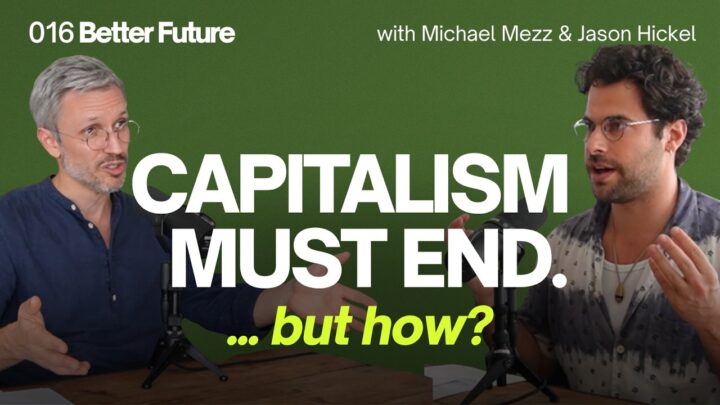
Hickel contends that by supplying necessary technologies and producer goods to developing nations on highly favorable terms, Beijing is effectively «delinking» these countries from centuries of exploitation by the Western imperial core. «China is effectively undermining the imperial/exploitation order that has existed for the past 500 years,» Hickel stated. By building up indigenous productive capacities, China provides an alternative to the traditional debt-trap and technology-hold models historically imposed by the Global North.
If Hickel’s assessment holds—that a new, post-Western industrial hub is forming in the Global South—it presents a unique strategic puzzle for wealthy Western-aligned nations like Norway.
Norway Must Adapt: A Pragmatic Case for Engaging China
Norway faces a profound geopolitical paradox. The United States remains our largest ally, yet recent polling shows that 88% of Norwegians view it negatively—a sentiment fueled by Washington’s aggressive trade rhetoric, territorial jabs at close partners like Denmark and Canada, and relentless pressure on NATO members to hike military spending. At the same time, China’s global reputation is steadily rising—and while the trend is slower in Norway, it is still perceptible. Yet within Western-aligned media and political circles, there is a concerted effort to suppress positive Chinese achievements in science, green energy, and open-source technologies—precisely the tools that enable national sovereignty. FOR advocates for the same diplomatic and commercial normality Norway extends to every state in Europe and US.
This tension is palpable in Norway’s domestic security apparatus. PST’s 2026 threat assessment names Russia and China as the largest influence threats, while FFI’s mapping of the 2025 election year found Chinese actors attempting to shape Norwegian perceptions of Beijing. But we must ask: isn’t promoting a favorable national image ordinary statecraft? The US embassy, the British Council, and Israeli public diplomacy all actively engage in the exact same influence work in Norway—yet none are catalogued as «threats» to our democracy. The securitization of Chinese diplomacy, contrasted with the normalization of Western diplomacy, reveals a double standard that weakens Norway’s ability to think strategically. The strongest illustration of this disparity is that Norway maintains full trade with the state of Israel—which currently faces genocide proceedings at the ICJ—while treating routine Chinese diplomatic engagement as a security matter. Meanwhile, the very states we are told to trust spy on us openly through their corporate arms: Google, Meta, Palantir and other closed source AI services.
Norway should not be an instrument of anyone’s bloc politics. We must resist being dragged toward a confrontation with China that serves no clear Norwegian interest. This is precisely the common-security logic articulated by Olof Palme—a clear-eyed, non-aligned stance. It’s important to discuss Norwegian autonomy and what alignment costs Norwegians.
The 500-year-old Western order is fragmenting, but in its place is a multipolar market. For Norway, building good relations also with China and Russia isn’t about choosing sides; it is a pragmatic necessity to thrive in the next half-century.